
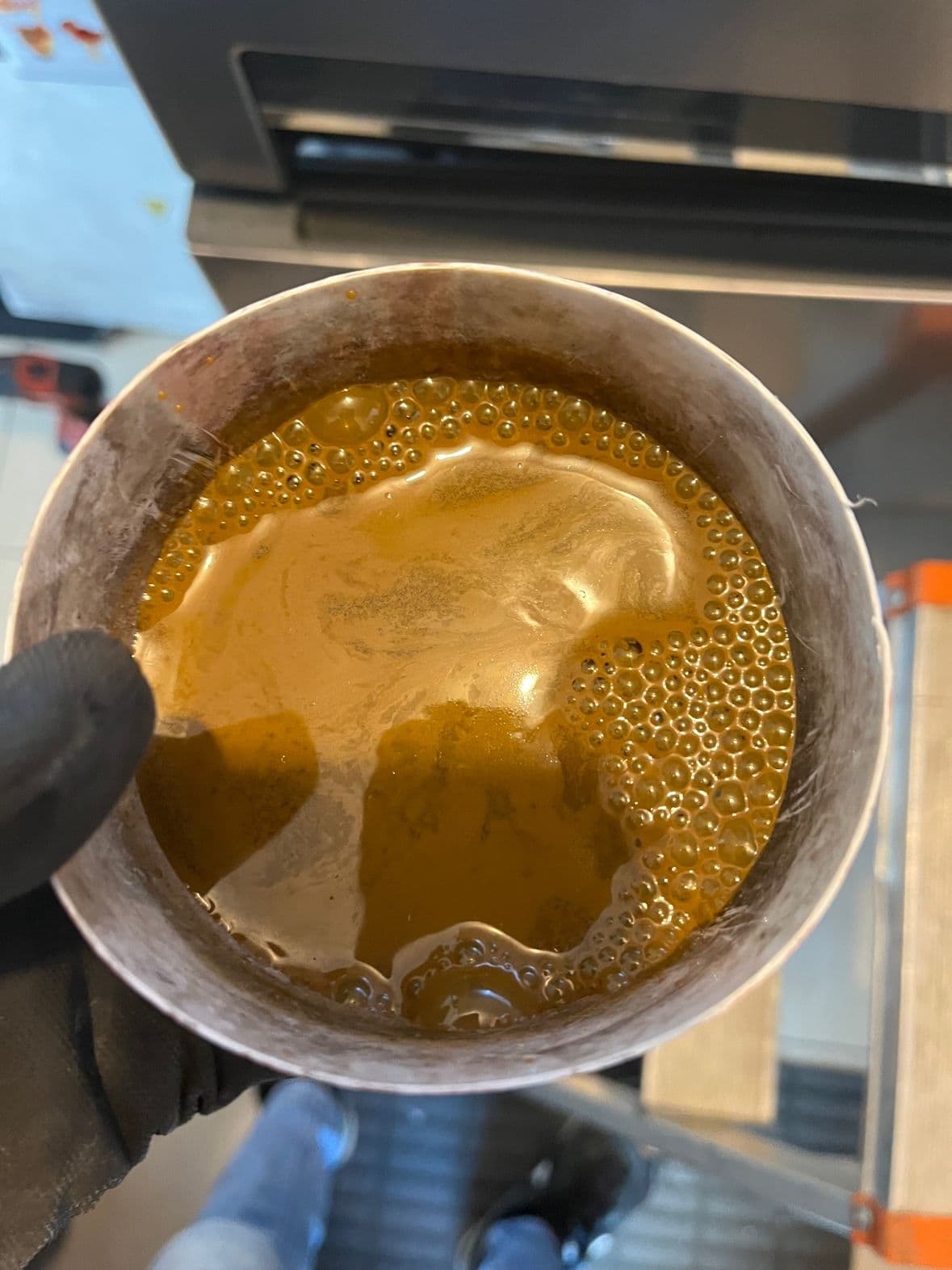
 Sludge and heating
Magnetic filter or permanent treatment: what each one actually does
They do not even go in the same place, and both promise a clean circuit, but they do not solve the same thing. One captures particles; the other acts on their ability to adhere. We compare scope, maintenance, effect on existing deposit and the cases where fitting both makes sense.
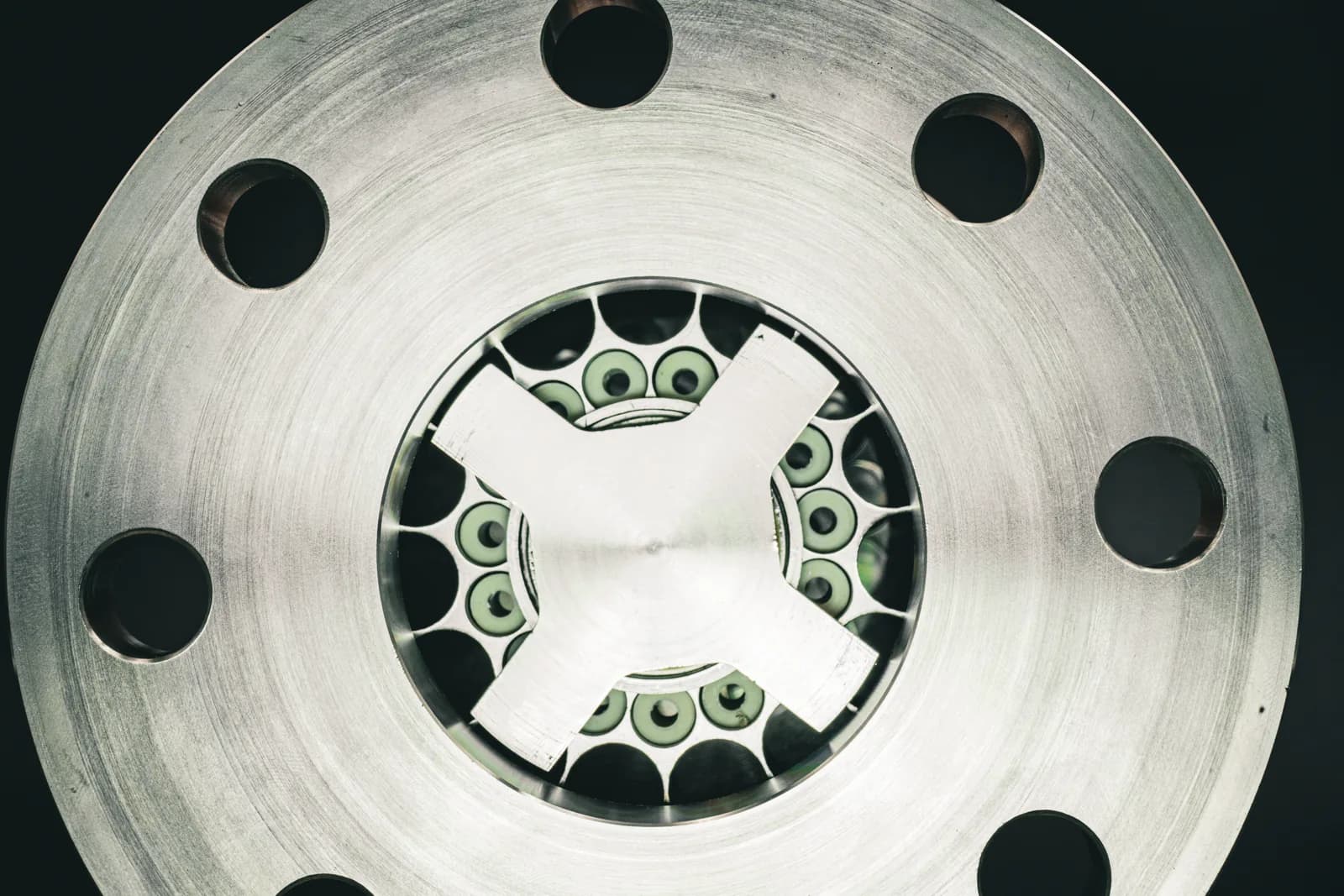
Both are sold on the same promise —a clean circuit— but they do not even fit in the same place: the magnetic filter goes on the return, before the boiler; physical treatment goes on the flow, after the pump. But they tackle the problem at different moments. A magnetic filter captures the ferrous particles already circulating in the water. Permanent physical treatment acts on those particles' ability to adhere, and includes a curative effect on what is already deposited on the walls.
Put plainly: one collects, the other stops things sticking and lifts what has stuck. They are not exact substitutes, and understanding the difference avoids buying the same function twice or leaving the problem half solved.
| Magnetic filter | DS-i physical treatment | |
|---|---|---|
| What it does | Retains circulating ferrous particles | Keeps particles in a non-adherent state |
| Acts on deposit already stuck | No | Yes, progressive curative effect |
| Non-ferrous particles | Limited capture | Acts the same on biofilm and non-ferrous matter |
| Consumption | None | None |
| Maintenance | Periodic emptying of the canister required | Initial purge and a few purges early on |
| Pressure drop | Noticeable, and it rises as it fouls | Low and stable |
| Effect if not emptied | It saturates and stops retaining | It keeps working |
| Service life | Depends on the magnet and the seals | Solid 316L stainless body, no moving parts |
| Consumables | None | None |
What a magnetic filter does, and where its limit lies
A magnetic filter is a canister fitted on the return with a powerful magnet inside. The water slows on entry, the heavier particles settle out and the ferrous ones are trapped by the magnetic field. At each service the canister is emptied and the accumulated matter removed.
It is a useful and well-executed device. Its limits are three, and all of them matter when deciding:
- It does not stop sludge forming. It captures what has already formed and is already circulating. Corrosion keeps producing magnetite at the same rate.
- It does not act on what is stuck. Deposit fixed to the bottom of a radiator or coating the inside of a heat exchanger does not circulate, so it never reaches the filter.
- It depends on someone emptying it. A saturated filter stops retaining and adds pressure drop into the bargain. In installations without a maintenance contract, it is common for one to go years without being opened.
What permanent physical treatment does
The DS-i acts on the fluid as it passes, by the same physical route as the limescale unit: vortex, Venturi acceleration and low-frequency sonicophysical waves. The result is that suspended particles end up in a state where they do not adhere to pipe walls or to circuit components. New deposit stops forming. And those same waves progressively break up the deposit already there, which comes away gradually and is flushed out at purges.
The release is gradual by design, not by weakness: the aim is for deposits to come away as fine particles rather than as plates capable of blocking a thermostatic valve or a heat exchanger downstream. On a badly degraded circuit the process can take several months.
INOX 316LSolid body, no moving parts
25 barWorking pressure
10 yearsWarranty
The unit consumes nothing: no electricity, no water, no consumables. The circuit's own hydraulic energy drives the internal mechanism.
Retaining or preventing adhesion: why they are not the same
The distinction looks subtle and it decides the outcome. A filter works downstream of the problem: it waits for the particle to exist, come loose and pass through its body. Permanent treatment works on the condition that makes the particle stick, so it acts across the whole circuit at once, including the areas where water moves slowly and from which nothing would ever be carried to the filter.
| Situation | Magnetic filter | Permanent treatment |
|---|---|---|
| Loose particle in circulation | It captures it | It keeps it loose and it leaves at the purge |
| Sludge stuck in the bottom of a radiator | It never reaches it | It breaks it up |
| Biofilm in low-temperature underfloor heating | No appreciable effect | It acts on it |
| Heat exchanger already coated | It never reaches it | It cleans it progressively |
| Freshly flushed circuit | Keeps it clean if emptied regularly | Keeps it clean with no intervention |
What about chemical flushing? And inhibitors?
A chemical flush is a one-off curative operation: drain, circulate a descaling and dispersing product, rinse and refill. It leaves the circuit clean that day and it is the best way to start from zero when the condition is very poor. It prevents nothing: without a permanent measure behind it, the circuit returns to where it started.
A corrosion inhibitor is genuinely preventive, but it only works while the concentration holds. Every partial drain-down, every top-up and every intervention dilutes it, so it demands periodic checking and redosing. It also creates a dependency on a product which, in industrial installations, becomes a cost line and a waste management issue.
Does it make sense to fit both?
Yes, in two specific situations. First, on a badly degraded circuit during the cleaning phase: while the DS-i lifts the accumulated deposit, a magnetic filter collects part of that material and reduces how often purging is needed. Second, on large installations where the volume of material released during the first months justifies a capture point.
On a domestic installation in good condition, fitting both is redundant. The sensible sequence is a chemical flush if needed, permanent treatment after, and a magnetic filter only if the case calls for it.
DS-i range by size
| Reference | Connection | Nominal diameter | Maximum flow | Mounting |
|---|---|---|---|---|
| DS-i20 | ¾″ | DN20 | 1.2 m³/h | Female thread |
| DS-i25 | 1″ | DN25 | 4.4 m³/h | Female thread |
| DS-i32 | 1″¼ | DN32 | 5.7 m³/h | Female thread |
| DS-i40 | 1″½ | DN40 | 9.5 m³/h | Female thread |
| DS-i50 | 2″ | DN50 | 17.5 m³/h | Female thread |
| DS-i65 | 2″½ | DN65 | 29 m³/h | PN16 flange |
| DS-i80 | 3″ | DN80 | 41.8 m³/h | PN16 flange |
| DS-i100 | 4″ | DN100 | 91 m³/h | PN16 flange |
| DS-i150 | 6″ | DN150 | 300 m³/h | PN16 flange |
| DS-i200 | 8″ | DN200 | 510 m³/h | PN16 flange |
Data from the official datasheets. For most residential and building cases the threaded sizes cover the whole installation; industry and district heating move to flanged mounting.
The unit is fitted on the circuit flow, after the pump, with straight pipe before and after and with no welding on the body. Installation detail and the symptoms that justify intervening are in Sludge in closed circuits.
Frequently asked questions
Can I remove the magnetic filter if I fit a DS-i?
Technically yes, though the prudent approach is to keep it through the circuit's cleaning phase, when the most material comes away, and decide afterwards. If you keep it, it still needs emptying: a saturated filter adds pressure drop without contributing anything.
Does the DS-i need a clean circuit to work?
No, it works just as well on a dirty circuit. What changes is the timescale: the worse the starting condition, the longer the curative effect takes to show. On very degraded circuits a prior chemical flush shortens the process considerably.
What happens to non-ferrous particles?
That is one of the important differences. A magnetic filter is optimised to retain iron; bacterial biofilm and copper or aluminium particles largely escape it. Physical treatment acts on adhesion regardless of what the particle is made of.
Does it suit industrial installations?
Yes, and that is where the value shows most. Circuits are larger, chemical maintenance is expensive and production stoppages from circuit failures are costly. Eliminating biocides, corrosion inhibitors and waste management has a direct impact on operations.
Does the pipe material of the circuit matter?
No. The unit acts on the fluid, not on the wall, so it is compatible with black steel, copper, multilayer and polypropylene. In older heating circuits, where several materials coexist, that is a practical advantage.
About this article
Written by the DRAG'EAU Ibérica technical team, drawing on the product range's technical data sheets, product certificates and hands-on installation experience across Spain, Portugal and Andorra. Ranges and estimates are identified as such in the text.
More from the blog
Keep reading
Sludge and heating Devices and comparisons
Salt softener or physical treatment: a point-by-point comparison
The two technologies solve the same problem by opposite routes: one removes calcium from the water, the other stops it bonding. We compare consumption, discharge, maintenance, space and running costs, and we also say where a softener remains the right answer.12 min read Limescale and hardness
Water treatment glossary: 60 terms explained
Water treatment vocabulary sits across chemistry, plumbing and regulation, which makes it easy to get lost. This glossary gathers the sixty terms that turn up in any quotation, datasheet or water quality report, explained without jargon and grouped by theme.14 min readNewsletter
We'll tell you about every new article
We publish technical guides on water treatment, with no fixed schedule and no filler. Leave your email and we'll let you know when the next one is out.