
 Limescale and hardness
Salt softener or physical treatment: a point-by-point comparison
The two technologies solve the same problem by opposite routes: one removes calcium from the water, the other stops it bonding. We compare consumption, discharge, maintenance, space and running costs, and we also say where a softener remains the right answer.
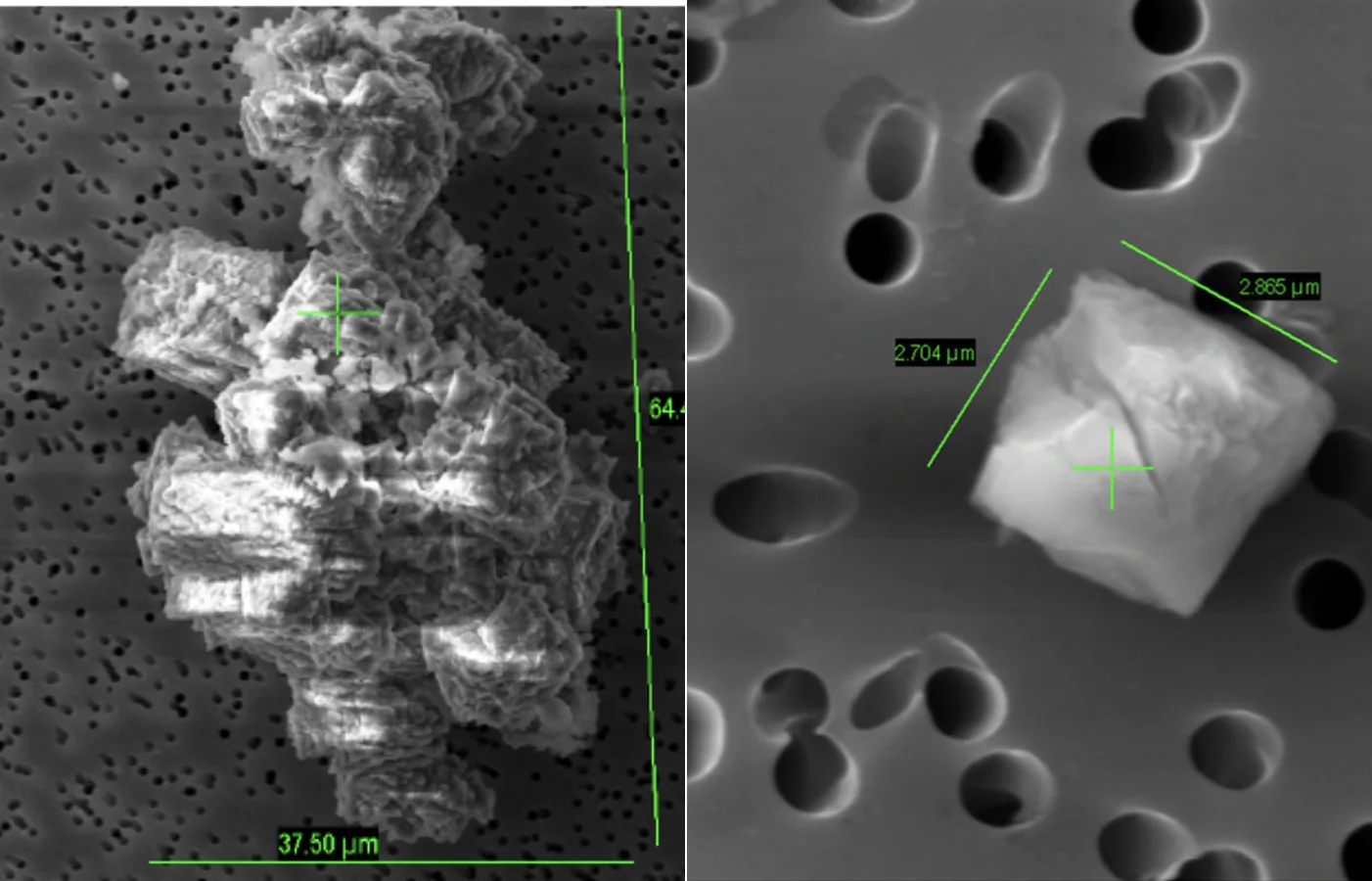
Both units go in the same place, on the main water inlet, and both promise the same thing: that limescale stops damaging the installation. But they do not do the same thing. A resin softener removes calcium and magnesium from the water and replaces them with sodium. A physical limescale unit leaves the minerals where they are and acts on how they crystallise so that they stop bonding.
Every other difference follows from that difference of principle: consumption, discharge, maintenance, the space required and what it costs to keep the unit running for ten years. Let us take them in order.
| Resin softener | EF-i physical unit | |
|---|---|---|
| Principle | Ion exchange: calcium for sodium | Forced crystallisation: limescale stops bonding |
| Hardness after the unit | Reduced | Unchanged |
| Water composition | Altered: less calcium, more sodium | Identical to the inlet |
| Consumables | Salt, permanently | None |
| Electrical consumption | Yes, for the valve and controller | None |
| Water consumption | Regeneration water lost to drain | None |
| Discharge | Brine on every cycle | None |
| Maintenance | Salt top-ups and periodic checks | None |
| Effect on existing scale | None: prevention only | Preventive and curative |
| Space required | A cabinet next to a drain | A length of pipe |
| Service life | Resin and valve wear out | Solid 316L stainless body, 10-year warranty |
How each one works
The ion-exchange resin softener
Water passes through a vessel filled with resin in sodium form. The resin has a greater affinity for calcium and magnesium than for sodium, so it captures them and releases sodium in exchange. The water comes out with very low hardness, which is exactly what the unit promises.
The resin saturates. To use it again it must be regenerated: a concentrated brine is passed through, displacing the captured calcium and returning the resin to its sodium form. That calcium, along with the surplus salt, goes down the drain. And so on, cycle after cycle, for the life of the unit.
Physical treatment by vortex and waves
No chemical reaction, no medium to saturate. The internal geometry spins the water on itself in a vortex, a Venturi restriction accelerates the flow, and that acceleration sets the stainless steel core vibrating. The resulting low-frequency sonicophysical waves break up calcite, the crystal that grips walls, and reduce it to a fine powder the water carries away without depositing.
The calcium stays in the water. An analysis taken after the unit will show the same hardness as before. What has changed is its behaviour, not its quantity. The full mechanism, step by step, is set out on the technology page.
What each one costs while it runs
The purchase price is only half the story. The other half is what the unit consumes over the following ten years, and that is where the two technologies part company entirely.
The salt
Consumption depends on inlet hardness and treated volume. For a four-person home with water at 30 °f, the usual order of magnitude is between 50 and 150 kg of salt a year. In an apartment block or a hotel that figure multiplies by the number of users, and topping up moves from being a household chore to a maintenance line item with its own logistics.
The regeneration water
Each regeneration cycle consumes water to rinse the resin and flush the brine. The proportion varies with the unit and its settings, but it usually sits around 5 % to 8 % of the treated water. On a domestic consumption of 120 m³ a year, that is 6 to 10 m³ going down the drain every year purely to keep the unit operational.
The electricity and the servicing
The electrical draw of the valve and controller is modest, but it is permanent and requires a socket next to the unit. Periodic servicing, on the other hand, is not optional: the residual hardness setting, the state of the resin and the operation of the valve all need checking. In communal installations this is usually formalised in an annual maintenance contract.
| Heading | Softener | EF-i physical unit |
|---|---|---|
| Salt | Recurring, every year | Not applicable |
| Regeneration water | 5 % to 8 % of treated water | Not applicable |
| Electricity | Continuous | Not applicable |
| Servicing and adjustment | Periodic | Not applicable |
| Resin replacement | Medium term | Not applicable |
| Total recurring cost | Significant and rising | Zero |
We do not give price figures, because they depend on size, country and distributor. The relevant comparison here is of headings: one of the two units generates none.
The discharge, which is no longer a detail
Every regeneration sends a brine loaded with sodium chloride and the removed calcium into the sewer. There is no practical recovery route for that discharge: it reaches the treatment plant, which is not designed to remove dissolved salts, and from there the receiving environment. In water-stressed areas, or where treated water is reused, the rise in salinity is a real problem, and some municipalities have begun to restrict or regulate softener installation for that reason.
Physical treatment discharges nothing because it consumes nothing. No brine, no rinse water and no waste to manage. In a project pursuing an environmental building certification, that difference counts.
Installation, space and constraints
| Softener | EF-i physical unit | |
|---|---|---|
| Space | Cabinet or vessel with brine tank | The length of the unit itself on the pipe |
| Drain | Essential | Not needed |
| Power socket | Essential | Not needed |
| Installation requirement | Bypass and service clearance | 20 cm of straight pipe either side |
| Installation time | Half a day depending on the site | Under an hour |
| Later access | Needed for salt top-ups | No need to return |
The drain requirement constrains more than people expect. In a refurbishment, or in the meter cupboard of an existing building, there is often no drain near the main inlet, and running one there is the expensive part of the job. The physical unit screws into the pipe and asks for nothing else.
Where each one wins
There is no single answer, and claiming otherwise would be selling badly. Both technologies have their ground.
For the vast majority of plumbing installations, the problem to solve is the second one. Nobody wants soft water for its own sake: they want the cylinder to last and the shower not to block.
Can the two be combined?
Yes, and it happens often where a softener is already installed. The physical unit goes upstream, before the softener, and does not interfere with its operation. What happens then is that the softener works with water that no longer scales, so it can be set to a higher residual hardness and its salt consumption falls.
With reverse osmosis the compatibility is just as direct: the osmosis unit sits at the point of use, the limescale unit at the main inlet, and each does its job without getting in the other's way.
In practice, what often happens over time is that the softener stops looking indispensable and some users end up removing it. That is their call: compatibility is guaranteed either way.
Frequently asked questions
Does a salt-free limescale unit really work?
It works on the problem it targets, which is carbonate adhesion, not on hardness. If the expectation is to see the analysis figure drop, it will not be met. If the expectation is no more crust in the cylinder and the taps, it will. It is also worth checking that the specific unit carries recognised health and product certifications, because this category contains solutions of very uneven quality.
How much salt does a domestic softener use per year?
For a four-person home with water around 30 °f, the usual range is 50 to 150 kg a year. It depends mainly on inlet hardness, the volume consumed and the unit's regeneration efficiency.
Can I remove the softener if I fit a physical unit?
Technically yes, unless you need soft water for a process reason. The sensible approach is to fit the physical unit, let a few weeks pass and check the result at the points where limescale used to appear before dismantling anything.
Does a physical unit work on well water?
It may, but it requires prior assessment. The units are designed and optimised for public mains water. Well water can have a highly variable composition, with iron or manganese present, and that affects the result. An analysis and a review of the case are needed before installation.
Does the installation lose pressure with a physical unit?
There is a pressure drop, as with any fitting inserted into a pipe, but it is small and comparable to that of a standard sediment filter. On a correctly sized installation it is not noticeable.
How long does each unit last?
A softener has wearing parts: the valve and the resin, both replaced in the medium term. EF-i units are machined from a solid 316L stainless steel body, with no moving parts and no consumables, and come with a 10-year warranty; absent abnormal conditions, their real service life goes well beyond that.
About this article
Written by the DRAG'EAU Ibérica technical team, drawing on the product range's technical data sheets, product certificates and hands-on installation experience across Spain, Portugal and Andorra. Ranges and estimates are identified as such in the text.
More from the blog
Keep reading
Limescale and hardness Limescale and hardness
Is hard water bad for your health? What the evidence says
Drinking hard water does not harm your health: hardness does not even appear among the parameters with a health-based limit value. We go through what the reference bodies say about the three most common worries, and point out the one thing that really does deserve attention, which is not where most people look for it.9 min read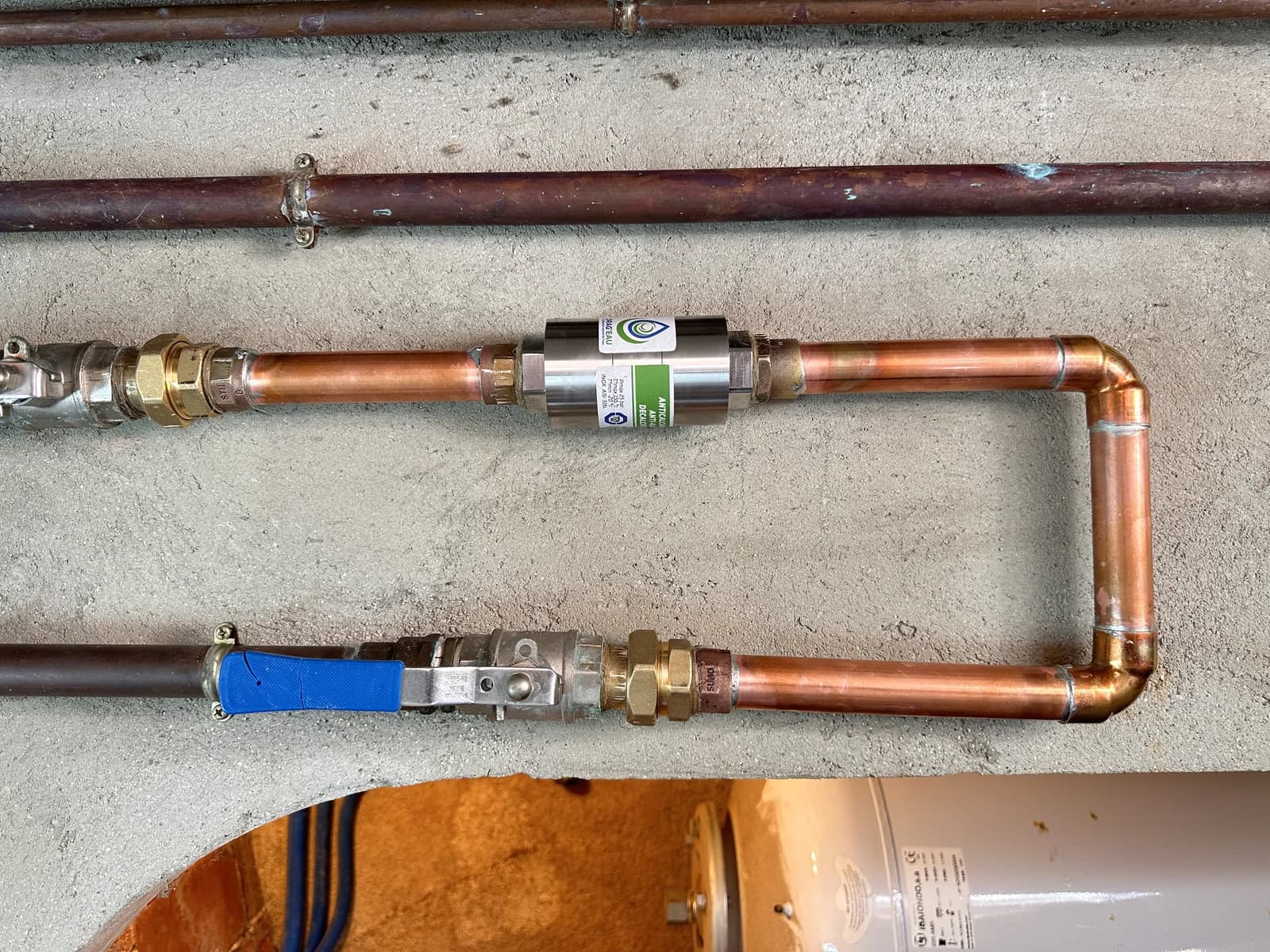 Devices and comparisons
EF-i limescale unit: the 12 questions installers actually ask
We collect the questions that come up on every site visit and answer them straight: what happens to the limescale, what maintenance to promise the customer, how it is fitted, which sizes cover each installation and what equipment it lives alongside. With the full FAQ video.13 min readNewsletter
We'll tell you about every new article
We publish technical guides on water treatment, with no fixed schedule and no filler. Leave your email and we'll let you know when the next one is out.