
 Sludge and heating
Open and closed water circuits: the difference that changes water treatment
The difference is not whether the pipework forms a ring, but how the water interacts with its surroundings. This guide separates common site usage from ASHRAE’s hydraulic definition, resolves the cases that cause most confusion and helps prevent an open-water solution being applied to a closed circuit, or vice versa.
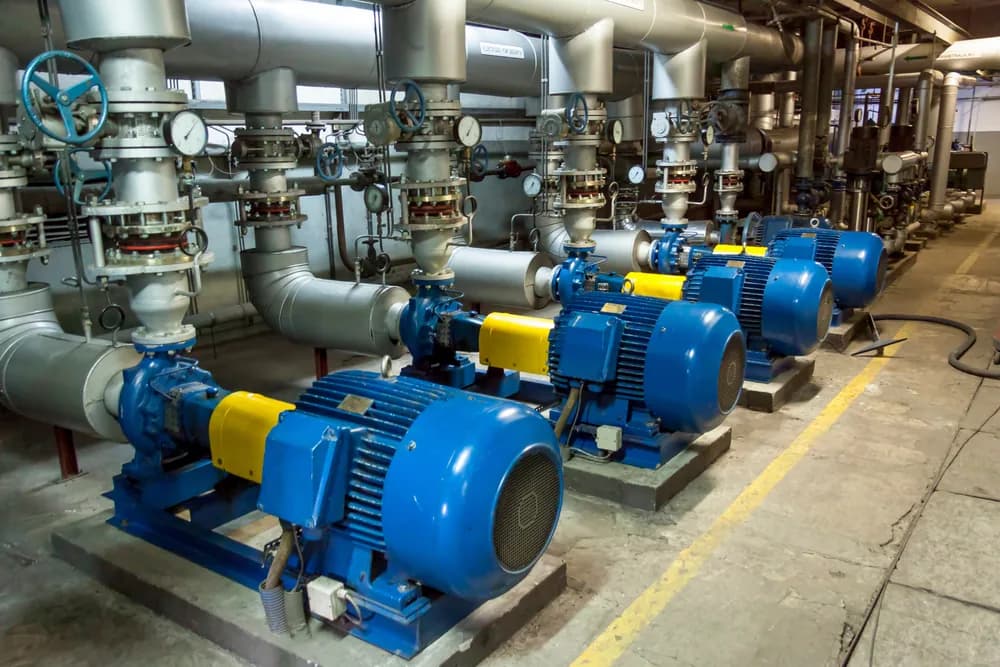
An open water circuit receives fresh water and discharges water from the system; a closed circuit retains and recirculates essentially the same volume. That operational rule is enough to guide most water-treatment assessments in buildings: where minerals and oxygen are continuously replenished, problems associated with the incoming water tend to dominate; where the fluid is retained, corrosion, air, installation debris and the sludge remaining inside become the main concerns.
One distinction is essential. On site, ‘open’ and ‘closed’ often describe water renewal or recirculation. In hydraulic engineering, ASHRAE defines a closed system by its interfaces with a compressible gas and by its response to static elevation. An open-vented heating system with a feed and expansion cistern can therefore still be hydraulically closed in ASHRAE’s sense: ‘open-vented’ describes its pressurisation arrangement, not a once-through water service. This guide uses the practical water-treatment criterion and flags the cases in which the two classifications do not coincide.
Make-upwhen continuous, fresh water brings salts and oxygen back in
Inventorywhen retained, every contaminant continues to circulate
Two sideseach side of a heat exchanger must be classified separately
The practical rule: follow one water molecule
To classify an installation, set aside the shape of the schematic for a moment and follow one molecule. If it enters from the mains, passes through the service and ends up at an outlet, in a process or down a drain, it is a once-through or water-renewal service. If it repeatedly returns to the pump, heat source and emitters without deliberate consumption, it is a closed recirculating circuit.
| Criterion | Open or water-renewal service | Closed or recirculating circuit |
|---|---|---|
| Where the water goes | Leaves through use, process discharge, evaporation or blowdown | Returns to the heat source and remains in the circuit |
| Make-up water | Continuous or linked to consumption | Initial fill followed only by small top-ups |
| Oxygen ingress | Renewed with the water and possibly through atmospheric contact | Should be limited after filling and venting |
| Mineral salts | Arrive continuously | Initial load is confined; abnormal make-up replenishes it |
| Typical problem | Scale, sediment or concentration through evaporation | Corrosion, magnetite, sludge, air and debris |
| Examples | Domestic water, once-through process, evaporative cooling tower | Heating, chilled water, underfloor heating |
| First question | What quality and flow rate enter? | Why are oxygen or make-up water entering? |
This table guides the assessment; it does not replace the hydraulic schematic, water analysis or manufacturers’ instructions.
What happens to water in an open circuit
In a domestic water installation, every time a tap is opened, mains water enters and displaces an equivalent quantity towards use and drainage. Hardness, alkalinity, chlorides and dissolved oxygen are replenished with every litre. When the water is heated, calcium carbonate becomes less soluble locally and the risk of deposition rises in heat exchangers, calorifiers, immersion heaters and restrictions. The relevant question is not how much mineral was present in the first fill, but how much mineral mass passes through the installation over time.
Wash-down services, some process-water systems and equipment that discharges a significant proportion of its water also operate with renewal. In a cooling tower, evaporation removes water but leaves its salts behind: their concentration rises until blowdown and make-up controls restore the balance. Describing it merely as ‘a circuit that recirculates’ conceals the very phenomenon governing its water chemistry.
What happens to water in a closed circuit
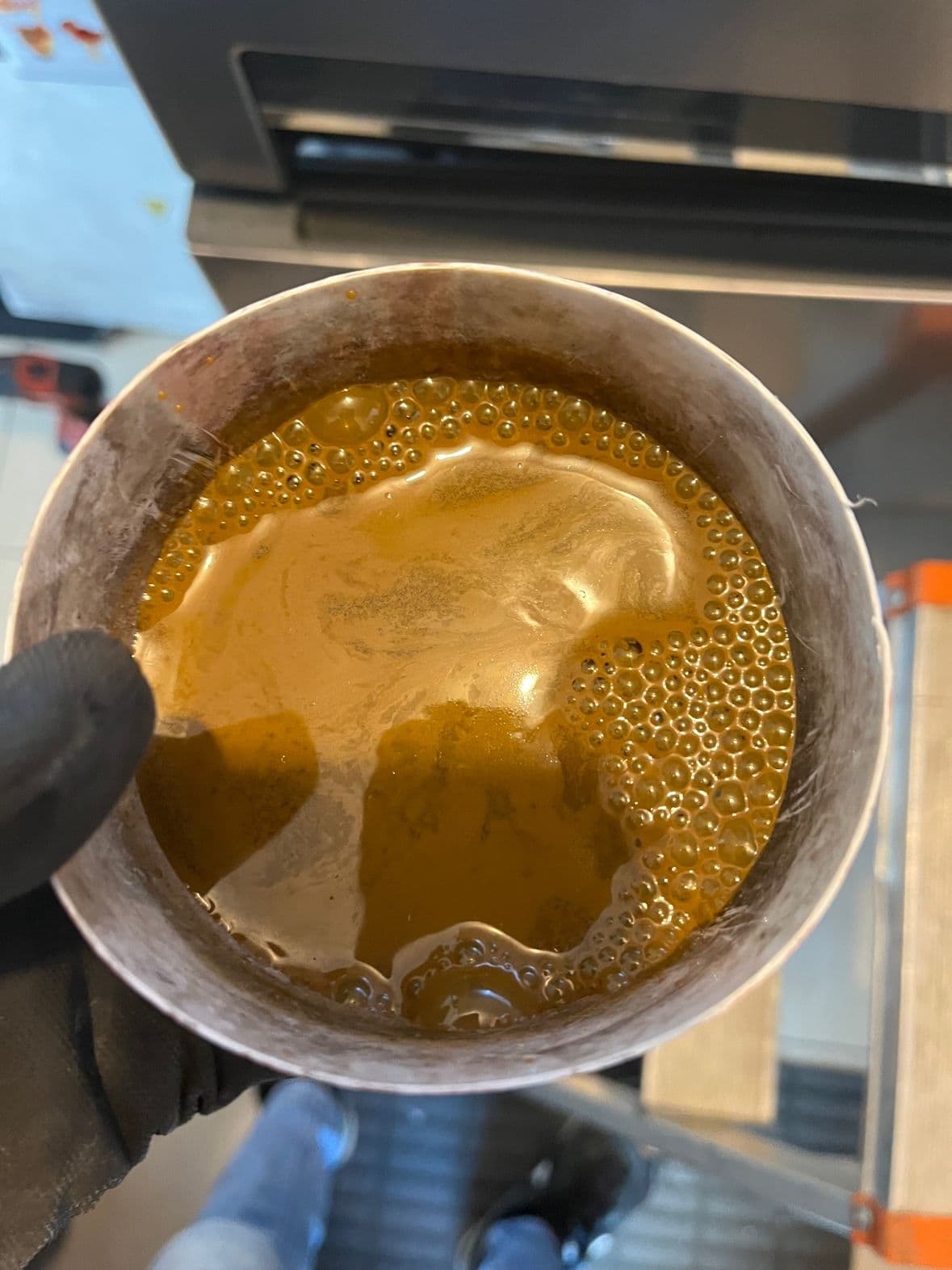
In heating, hydronic cooling or underfloor heating, the fluid carries energy and returns to the heat source. After the initial fill, dissolved oxygen should be vented and make-up reduced to minor losses. The amount of calcium introduced with the first fill is finite; installation debris, oxides and corrosion products, however, remain in circulation or settle in low-velocity areas, valves, pumps and heat exchangers.
A closed circuit is not chemically inert. It may contain steel, copper, aluminium, elastomers, glycol and inhibitors, each with its own pH and compatibility limits. Oxygen may enter through non-barrier polymer pipework, seals, air vents or inadequate system pressure. The technical guide Caleffi idronics No. 18 emphasises control of fill-water quality, removal of gases and dirt, and supervision of make-up water. The full background to sludge in closed heating circuits is covered in our dedicated guide.
Three misleading cases that lead to the wrong treatment
- The domestic hot-water secondary return. The pipework forms a ring and a pump keeps the service warm, but users draw water and the mains replaces the same volume. For scale and drinking-water treatment it remains a water-renewal domestic service, not a closed heating circuit.
- The cooling tower. Water circulates between the basin and the heat exchanger, but it is exposed to the atmosphere, evaporates, concentrates salts and requires make-up and blowdown. ASHRAE uses it as an example of a hydraulically open system because it has multiple interfaces with air.
- The closed circuit with heavy make-up. The drawing may show a closed installation, but a filling valve operating every day changes its chemical regime. Measure the make-up and repair its cause before sizing treatment; treating the symptom while fresh water and oxygen continue to enter produces unstable results.
There is a fourth common error: classifying an entire installation from only one side. A plate heat exchanger separates two water inventories. The primary may be closed while the domestic-water secondary is open; a chiller may equally have a closed chilled-water circuit and an open cooling-tower circuit. Each side requires its own assessment, materials, controls and treatment location.
How to identify the circuit during a site survey
Draw the source, route and destination
Mark the mains connection, filling point, pumps, heat exchangers, outlets, evaporation, blowdown and drains. Separate both sides of every heat exchanger.
Check whether the water mass is retained
Ask how much water is added and how often. If there is no meter, readings taken before and after a stable period reveal more than a label on the plant-room schematic.
Look for contact with the atmosphere
Inspect basins, open tanks, towers, overflows, expansion vessels and any point where air can interact with the water. Record an open vent separately from continuous water renewal.
Relate symptoms to analysis
In an open service, consider hardness, alkalinity, conductivity, temperature and concentration. In a closed circuit, fill-water quality must be supplemented by pH, metals, solids, glycol or inhibitor, air and cumulative make-up volume.
The classification is secure only when the schematic and the measurements tell the same story. Black water, loaded strainers or cold radiators point towards sludge, but do not by themselves identify the oxygen path. Equally, high hardness indicates scaling potential, not the actual deposition rate without information about temperature, consumption and heat-transfer surfaces.
Which treatment is appropriate for each regime
Open service: act on the water passing through the installation
Where the aim is to limit limescale adhesion without removing calcium or adding salt, an EF-i may be assessed at the service inlet and sized for pipe diameter and flow rate. Its scope must be stated accurately: it does not lower measured hardness, demineralise water, correct non-potable quality or replace the specific controls required by a cooling tower or industrial process. The choice between it and a softener depends on the required outcome; our salt softener or physical treatment comparison sets out that distinction.
Closed circuit: control the cause and manage what recirculates
In a circuit affected by sludge, a DS-i may be considered as continuous physical treatment to limit adhesion and encourage gradual release of deposits, provided that a means of purging or removing them is available. It does not repair leaks, stop an oxygen ingress route, replace hydraulic balancing or make an initial clean unnecessary where the circuit is obstructed. Air and dirt separation, cleaning, magnetic filtration, conditioned fill water and compatible inhibitors may all be complementary measures, depending on condition, materials and the heat-source manufacturer’s instructions.
Mixed systems: make one decision for each side
There is no contradiction in applying different strategies on opposite sides of a heat exchanger. The domestic hot-water secondary may need protection against limescale, while the closed primary needs corrosion and sludge control. Professional specification records the purpose of each device, its position, the variables to be checked and the criterion used to assess the result.
What the design and maintenance record should state
- A schematic showing each circuit boundary and every make-up, blowdown, drain and atmospheric-contact point.
- Volume, flow rate, temperature, pressure and wetted materials, including elastomers and glycol-based fluids.
- The required quality of fill and make-up water, together with the test method and frequency.
- Cumulative make-up volume in closed circuits and the threshold that triggers investigation.
- The plan for cleaning, venting, air and dirt separation, any dosing, and subsequent verification.
- The declared purpose and limits of every treatment, in accordance with the heat-source and treatment-device manufacturers.
In Spain, IT 1.3.4.2.11 of the RITE amendment published in the Official State Gazette refers to technical standards and manufacturers’ criteria for preventing corrosion and limescale. The practical lesson travels well: identifying whether a circuit is open or closed is the beginning of the work, not permission to apply a universal recipe.
The useful conclusion and technical references
If the water is renewed, examine what enters and the mass passing through the system. If the water is retained, examine what remains inside and why water, air or contaminants are still entering. If there is a heat exchanger, repeat the analysis on each side.
- ASHRAE Handbook, Chapter 13: Hydronic Heating and Cooling, for the hydraulic definition and behaviour of open and closed systems.
- Caleffi idronics No. 18: Water Quality in Hydronic Systems, for fill-water quality, gases, dirt, corrosion and make-up water in hydronic circuits.
- RITE: Royal Decree 178/2021 in Spain’s Official State Gazette, particularly the water-treatment criterion in IT 1.3.4.2.11.
Frequently asked questions about open and closed circuits
Is a circuit with a circulation pump always closed?
No. The pump proves only that recirculation exists. A domestic hot-water secondary return and a cooling tower both recirculate water, but also receive make-up and lose water through use, evaporation or blowdown. The complete water balance must be followed.
Is a domestic hot-water secondary return a closed circuit?
Not from a water-treatment perspective. The return maintains temperature between draw-offs, but every use removes potable water and the mains introduces fresh water carrying minerals and dissolved gases.
Is a cooling tower an open circuit?
Yes under ASHRAE’s hydraulic classification: it has multiple interfaces with air. It also evaporates water, concentrates salts and needs make-up and blowdown, so it requires a dedicated water-control and maintenance programme.
Why does a closed circuit continue to produce sludge?
Because closed does not mean free of oxygen or reactive materials. Make-up, diffusion through polymers, air ingress, corrosion between different metals, installation debris, or poor control of pH and fluid condition may still be present.
Can I fit a DS-i without repairing a make-up leak?
It should not be treated as a substitute for that repair. Frequent make-up replenishes oxygen and salts; first locate and correct the cause, then define the appropriate cleaning and continuous treatment for the circuit.
Do EF-i and DS-i perform the same function?
No. EF-i is intended for water-renewal installations where the aim is to limit limescale adhesion without demineralisation. DS-i is intended for closed circuits affected by particles, corrosion and sludge. The schematic, fluid and objective determine which is appropriate.
About this article
Written by the DRAG'EAU Ibérica technical team, drawing on the product range's technical data sheets, product certificates and hands-on installation experience across Spain, Portugal and Andorra. Ranges and estimates are identified as such in the text.
More from the blog
Keep reading
Sludge and heating Limescale and hardness
What limescale really is and why it sticks to your pipes
Everyone sees it on the shower screen and on the immersion heater, yet few know what it actually is or why it bonds. This guide walks through the whole mechanism: where limescale comes from, the reaction that makes it precipitate, what it costs an installation and which families of treatment exist today.11 min read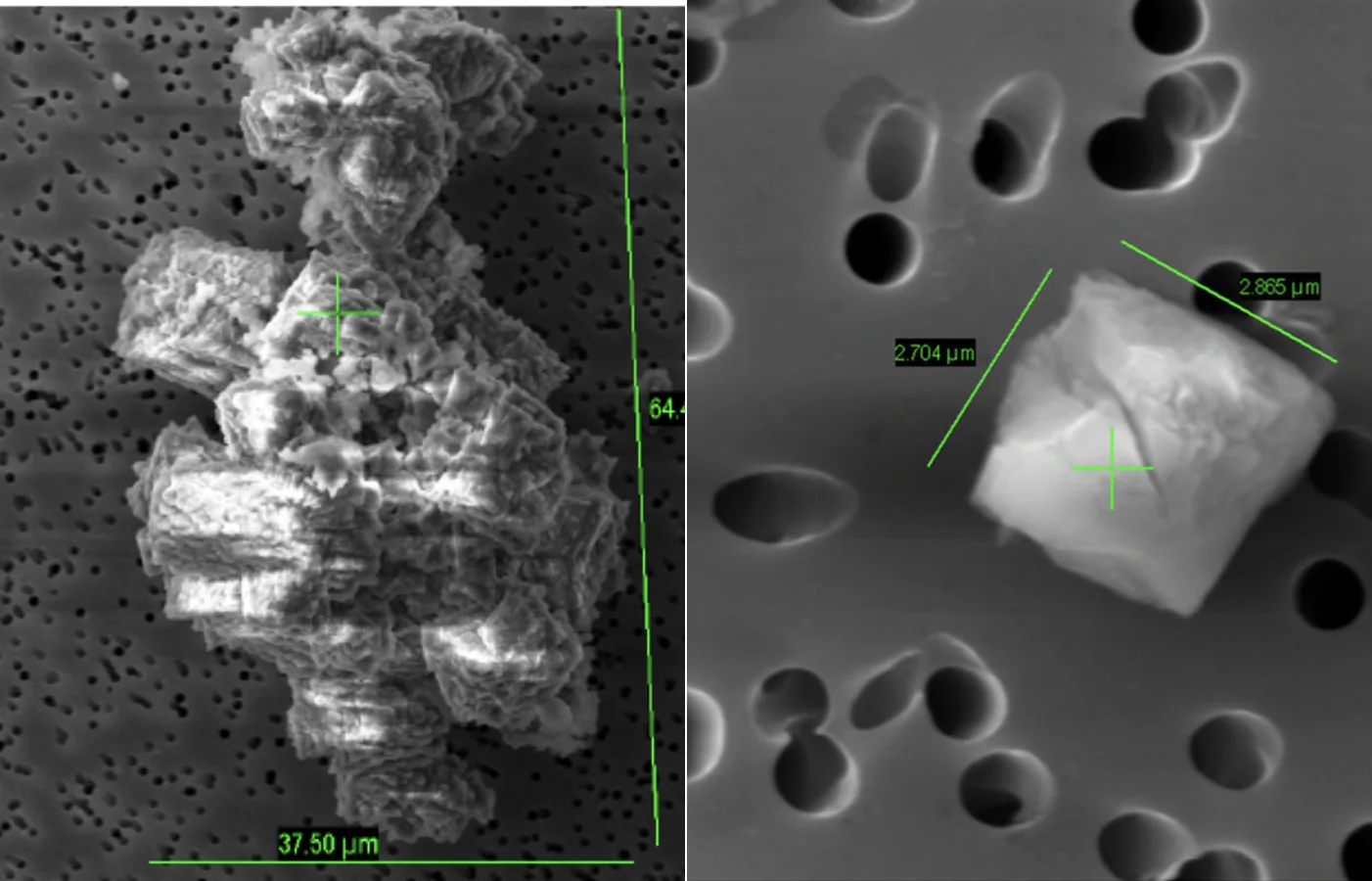 Devices and comparisons
Salt softener or physical treatment: a point-by-point comparison
The two technologies solve the same problem by opposite routes: one removes calcium from the water, the other stops it bonding. We compare consumption, discharge, maintenance, space and running costs, and we also say where a softener remains the right answer.12 min readNewsletter
We'll tell you about every new article
We publish technical guides on water treatment, with no fixed schedule and no filler. Leave your email and we'll let you know when the next one is out.