 Limescale and hardness
What limescale really is and why it sticks to your pipes
Everyone sees it on the shower screen and on the immersion heater, yet few know what it actually is or why it bonds. This guide walks through the whole mechanism: where limescale comes from, the reaction that makes it precipitate, what it costs an installation and which families of treatment exist today.
Limescale is dissolved calcium carbonate: calcium and magnesium that rainwater strips from the limestone it filters through before reaching the mains. While the water stays cold and moving, those minerals travel in solution and are invisible. The trouble starts when water is heated or left standing: the carbonate loses solubility, precipitates as crystals, and those crystals grab the first surface they meet. That is scale.
It is worth saying early, because almost everything written about limescale rests on one misunderstanding: limescale is not dirt and it does not come from outside. It is a mineral that was in the water from the start. What changes is not the quantity but the form. Understanding that change of form is understanding why some solutions work and others do not.
70 %of the Iberian Peninsula receives hard or very hard water
~10 %extra consumption per millimetre of scale in a heat exchanger
60 °Cthe temperature above which precipitation accelerates sharply
What limescale actually is
Rainwater is practically pure, but loaded with carbon dioxide. As it moves through the ground it becomes a very weak acid that dissolves limestone. The result is water rich in calcium bicarbonate and magnesium bicarbonate, two salts that stay perfectly stable as long as the conditions that formed them hold.
The sum of dissolved calcium and magnesium is called water hardness. In Spain and Portugal it is usually expressed in French degrees (°f), where 1 °f equals 10 milligrams of calcium carbonate per litre. Water at 35 °f carries 350 mg of carbonate per litre, or roughly 350 grams per cubic metre. A four-person home using 120 m³ a year pushes around 42 kilos of calcium carbonate through its pipes at that hardness.
Why it sticks: the reaction happening inside your boiler
Calcium bicarbonate is soluble. Calcium carbonate is not. The whole scaling phenomenon is the shift from the first to the second, and that shift happens when water loses the carbon dioxide holding the balance. There are three ways to lose it:
- Through heat. Calcium carbonate has inverse solubility: unlike sugar, it dissolves less readily the hotter the water gets. Heating is the fastest route to making it precipitate.
- Through turbulence or a pressure drop. A sudden change of section, a tight elbow, a tap outlet or a spray nozzle release CO₂ and tip the reaction out of balance.
- Through evaporation. When a droplet dries it leaves behind every mineral it carried. That is the white mark on the shower screen, the tap and the glassware.
The crystals formed at that moment are not neutral. Calcium carbonate can crystallise in several forms, and the one that dominates domestic installations is calcite: dense rhombohedral crystals with a strong tendency to bond to each other and to any wall. That affinity for surfaces is exactly what turns a mineral into a crust.
The role of temperature
Below 40 °C precipitation is slow and largely reversible. Between 40 and 60 °C it speeds up. Above 60 °C it takes off: the surface of an immersion element or the flame side of a plate heat exchanger runs locally well above the setpoint, and there limescale precipitates almost instantly.
This explains a paradox that puzzles a lot of people: health regulations require domestic hot water to be held at 60 °C to prevent legionella, and that very temperature is the one that most encourages scaling. Neither can be given up, so treatment has to act on the limescale rather than on the temperature.
Why the cylinder and the heat exchanger always go first
Scaling concentrates where three conditions meet: high temperature, rough surface and slow flow. A hot water cylinder has all three. A plate heat exchanger adds a fourth, a narrow flow path, which is why it loses performance before any other component in the system.
- Immersion heater element: the crust acts as insulation and forces the element to run hotter to deliver the same temperature. It ages early and eventually burns out.
- Combi boiler heat exchanger: a thin layer is enough for hot water flow to drop noticeably and for the burner to modulate poorly.
- Taps, aerators and showers: the smallest orifices close first. A shower head spraying unevenly is almost always scaled, not broken.
- Washing machine and dishwasher: limescale settles on the element and the pump, and forces you to raise the detergent dose for the same result.
- Hot water pipework: the usable bore shrinks year after year. The loss of flow is so gradual that it is rarely blamed on limescale.
What limescale costs an installation
Calcium carbonate is an excellent thermal insulator, and that is precisely the problem. Once it settles on the surface transferring heat, it forces the generator to burn or draw more to deliver the same temperature. The figure repeated most often in the trade is around 10 % extra consumption per millimetre of scale in a heat exchanger. It is an estimate, not a law: it depends on the geometry of the equipment and the nature of the deposit. But the order of magnitude is broadly accepted, and it explains why a boiler five years without treatment clearly burns more than on the day it was fitted.
| Scale thickness | Effect on heat transfer | What you notice |
|---|---|---|
| 0.5 mm | Performance loss still discreet | Nothing obvious |
| 1 mm | Around 10 % more consumption | Hot water takes longer to arrive |
| 3 mm | Significant performance loss and reduced flow | Kettling noise, uneven flow |
| 5 mm or more | The generator runs permanently strained | Repeat breakdowns, loss of hot water |
Indicative values from industry references. Real impact depends on the equipment, the hardness and the usage pattern.
On top of the energy cost sits the replacement cost. A cylinder that should have lasted fifteen years gets changed at eight. A heat exchanger is stripped and acid-cleaned, which shortens its life. A pump works against a pressure drop nobody designed for. And there is a third, quieter cost: the chemical product and the recurring maintenance that gets accepted as inevitable.
Calcite and aragonite: why the crystal form changes everything
Calcium carbonate can crystallise into several different structures with exactly the same chemical formula. The two that matter here are calcite and aragonite.
| Calcite | Aragonite | |
|---|---|---|
| Structure | Rhombohedral, compact | Acicular, fine needles |
| Behaviour | Bonds to walls and grows in layers | Stays in suspension, does not grip |
| Consequence | Hard crust, difficult to remove | Fine powder the water carries away |
| Where it appears | Standing hot water, rough surfaces | Agitated water, forced crystallisation |
This is the key to all physical water treatment: you do not need to remove calcium from water to prevent scaling, you only need it to crystallise in the form that does not stick. The mineral stays put, the water keeps its composition and its taste, and yet it stops forming crust. It is a radically different approach from removing the calcium, which is what a salt-based softener does.
The three families of treatment and what each one does
Anyone searching for how to get rid of limescale runs into proposals that look equivalent and are nothing of the sort. In reality there are only three ways to act on calcium carbonate, and it is worth knowing which is which before comparing prices.
Remove the calcium from the water
This is what an ion-exchange resin softener does: it swaps calcium and magnesium for sodium. The water comes out genuinely soft, but in exchange it consumes salt permanently, discharges brine to drain on every regeneration and changes the composition of the water.
Stop the calcium from bonding
This is physical treatment: the calcium stays in the water but is forced to crystallise in a non-scaling form. No consumables, no discharge and no change of composition. It is the principle behind the EF-i units.
Dissolve the scale already deposited
This is chemical cleaning, with acids or sequestrants. It acts on what is already scaled up, but does nothing to stop it forming again: it is a maintenance operation, not a solution.
The first two families solve the problem at source by opposite routes, and choosing between them mostly comes down to whether you want chemically softened water or not. We have set that comparison out point by point in Salt softener or physical treatment.
The limescale that is already there
An installation that has gone years without treatment does not start from zero: it already has a deposit. A purely preventive treatment freezes the situation but does not correct it, and that distinction usually decides whether it is worth intervening in an older system.
EF-i units also have a curative effect: the low-frequency waves propagate through the water column beyond the unit and progressively break up the existing layers, which the flow then carries away. It is not instant. In a heavily scaled installation the process runs into weeks or months, and it is gradual by design: deposits come away as fine particles, not as plates capable of blocking a component downstream.
Careful: limescale is not a closed circuit's problem
Everything above concerns the open circuit: the plumbing that continuously renews mains water. In a closed circuit for heating or cooling the water is not renewed, so the calcium it contained precipitated once and that was that. There the enemy is different: sludge, rust and biofilm generated by internal corrosion.
Confusing the two problems leads to fitting the wrong unit. If your issue is radiators cold at the bottom, uneven underfloor heating or black water at the bleed valve, the article you want is Sludge in closed heating circuits.
Frequently asked questions about limescale
Are limescale and scale the same thing?
In everyday use they are treated as synonyms, and in plumbing they refer to the same thing: the white calcium carbonate deposit that forms in pipes, taps and heating elements. Scale is the more common word for the deposit once formed and visible; limescale covers both the dissolved mineral and the deposit.
Does boiling water remove limescale?
Boiling does the opposite of what people expect: the heat makes the carbonate precipitate, and it settles at the bottom of the vessel. The water you pour has slightly less limescale, but the mineral has not disappeared, it has been deposited. It is exactly the mechanism that scales up a cylinder.
Why do some houses get limescale and others do not, on the same network?
Hardness depends on the source of the water and the geology of the ground, and it can vary noticeably between towns fed by different abstraction points. Within a single home, the hot water setpoint, the age of the installation and the pipe material all play a part too.
At what hardness is treatment worth it?
As a practical guide, below 15 °f water counts as soft and the scaling risk is low. Between 15 and 30 °f scaling becomes noticeable over the medium term. Above 30 °f treatment is almost always justified, and above 40 °f it is difficult to keep a hot water installation healthy without it.
Does physical treatment reduce water hardness?
No, and this matters: the hardness measured in a water analysis stays exactly the same, because the calcium has not been removed. What changes is its ability to scale. If the goal is a low number on the report, physical treatment will not deliver it. If the goal is no crust in the installation, it will.
Does limescale damage plastic pipe as much as copper?
The deposit forms on any material, though rough surfaces encourage it more than smooth ones. In plastic pipe scale grips slightly less well, but it still builds up at hot spots and changes of section. Pipe material delays the phenomenon; it does not prevent it.
About this article
Written by the DRAG'EAU Ibérica technical team, drawing on the product range's technical data sheets, product certificates and hands-on installation experience across Spain, Portugal and Andorra. Ranges and estimates are identified as such in the text.
More from the blog
Keep reading
Limescale and hardness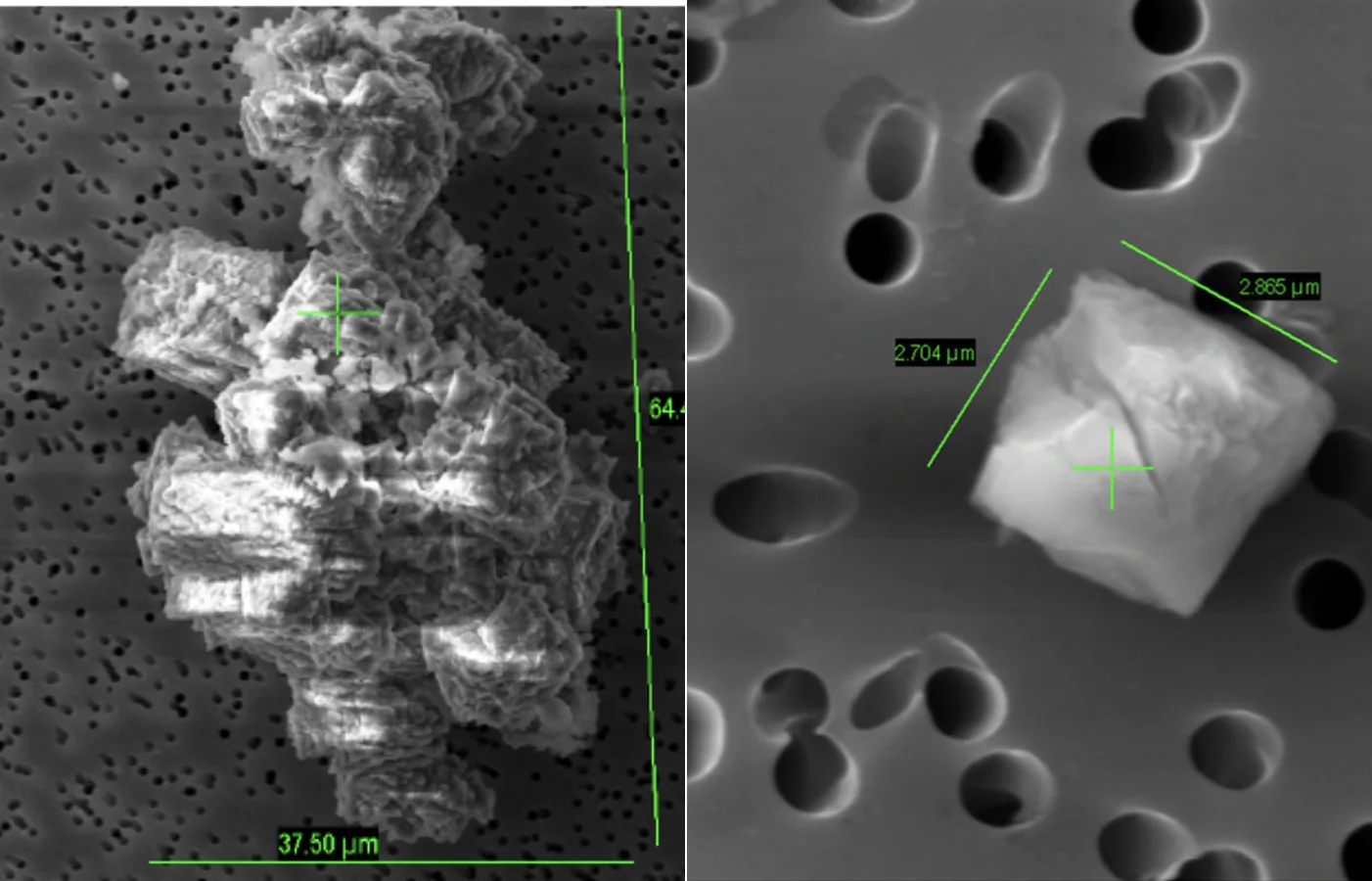 Devices and comparisons
Salt softener or physical treatment: a point-by-point comparison
The two technologies solve the same problem by opposite routes: one removes calcium from the water, the other stops it bonding. We compare consumption, discharge, maintenance, space and running costs, and we also say where a softener remains the right answer.12 min read Limescale and hardness
Is hard water bad for your health? What the evidence says
Drinking hard water does not harm your health: hardness does not even appear among the parameters with a health-based limit value. We go through what the reference bodies say about the three most common worries, and point out the one thing that really does deserve attention, which is not where most people look for it.9 min readNewsletter
We'll tell you about every new article
We publish technical guides on water treatment, with no fixed schedule and no filler. Leave your email and we'll let you know when the next one is out.