 Devices and comparisons
Anti-limescale: what it is, what it is for and why it works
The same word covers five things that have nothing in common: cleaners, tablets, cartridges, softeners and physical units. We explain what each one does to limescale, the chemistry behind it, how to make a homemade limescale remover without damaging anything and which one makes sense depending on where the problem shows up.
Anti-limescale means any product or unit designed to stop limescale causing problems. Some dissolve it once it has stuck, others hold it in the water during a wash and others stop it forming scale throughout the whole installation. Mixing them up is why so many people clean the shower screen every week without the problem ever going away.
Limescale is calcium carbonate: the calcium and magnesium dissolved in water precipitate with heat and form a hard crust on taps, heating elements, boilers and pipes. If you want to understand properly where it comes from, we explain it in what limescale is. Here we focus on what is done against it, and on why each solution works the way it does.
5product families sold as ‘anti-limescale’
CaCO₃calcium carbonate, what they all fight
≈ 10 %extra consumption per millimetre of scale in a heat exchanger
The five kinds of ‘anti-limescale’ on the market
| Type | What it does | Where it acts | How long it lasts | What it needs |
|---|---|---|---|---|
| Anti-limescale cleaner | Dissolves scale already stuck on, using an acid | The surface being scrubbed | Until the limescale returns | Cleaning again |
| Anti-limescale tablets | Hold calcium in the water during the wash | One appliance, one cycle | One wash | One tablet per wash |
| Polyphosphate cartridge | Doses an additive that slows scaling | The appliance downstream of it | Until the charge runs out | Replacing the cartridge |
| Salt softener | Removes calcium and swaps it for sodium | The whole installation | As long as it regenerates | Salt, rinse water, servicing |
| Physical limescale unit | Makes limescale crystallise without sticking | The whole installation | Permanent | Nothing: no consumables, no electricity |
The first three act at one specific point; the last two, on everything downstream of the unit.
Why anti-limescale removes scale: the chemistry in two lines
Limescale is a base, and bases dissolve in acids. Every anti-limescale cleaner, shop-bought or homemade, relies on the same reaction: the acid attacks the calcium carbonate, turns it into a soluble calcium salt and releases carbon dioxide. The bubbles you see when vinegar goes onto a crust of limescale are that CO₂ escaping.
Commercial products use more concentrated or faster-acting acids (citric, lactic, formic or sulphamic, depending on the brand) and add surfactants so the product clings to vertical surfaces. The chemistry is the same. That is why an anti-limescale cleaner works very well on the limescale you can see and does nothing to the limescale you cannot: inside the cylinder, the boiler or the pipes.
How to make a homemade limescale remover (and where not to use it)
For limescale on taps, shower screens, shower heads and kettles you do not need to buy anything. Two recipes cover almost every case:
White vinegar and water, half and half
For shower screens, tiles and taps. Spray it on, leave it for 15 to 30 minutes and rinse with water. For aerators and shower heads it works better to soak the part in neat vinegar for one or two hours.
Citric acid dissolved in lukewarm water
One or two tablespoons per litre. It has no smell, is sold as a powder and is the usual choice for kettles, coffee machines and irons. Fill the appliance, leave it to stand and rinse with one or two cycles of clean water.
Rinse and dry
Acid left on the surface keeps working. Rinsing thoroughly and drying with a cloth avoids marks and, as a bonus, delays the next layer of limescale.
A homemade limescale remover has one clear limit: it cleans, but it does not prevent. Next week the shower screen will have limescale on it again, because the water wetting it is still the same water. If the problem keeps coming back, the useful question is not what to clean with, but how to make limescale stop sticking.
Anti-limescale tablets and cartridges: what they are really for
Anti-limescale tablets for washing machines and dishwashers do not dissolve anything: they contain sequestrants and dispersants (polycarboxylates, phosphonates or citrates, depending on the manufacturer) that trap the calcium in the water during the wash so that it does not settle on the heating element or on the clothes. They protect that appliance during that cycle, and nothing else. In very hard water areas they can make sense for a particular appliance; they do not protect the home's cylinder, boiler or taps.
Polyphosphate cartridges are fitted upstream of a water heater or a washing machine and gradually release an additive that slows scaling. They work as long as there is charge left, so they need watching and replacing, and the treated water carries the additive.
And the chemical antiscalants used in industry?
Antiscalants are the industrial version of the same idea: phosphonates and polymers (mainly polyacrylates) dosed continuously by a pump in reverse osmosis plants, cooling towers and boilers. At doses of a few milligrams per litre they block crystal growth. They are effective, but they require constant dosing, analytical monitoring and an annual budget for the chemicals.
The water softener: taking calcium out of the water
A salt softener follows a different logic: instead of fighting limescale, it removes calcium and magnesium from the water with an ion-exchange resin, which swaps them for sodium. When the resin is saturated it is regenerated with brine, and that regeneration uses salt and water and produces a discharge. It protects the whole installation, but it changes the composition of the water and needs ongoing maintenance. The point-by-point comparison is in salt softener or physical treatment.
The physical limescale unit: why it works, explained with science
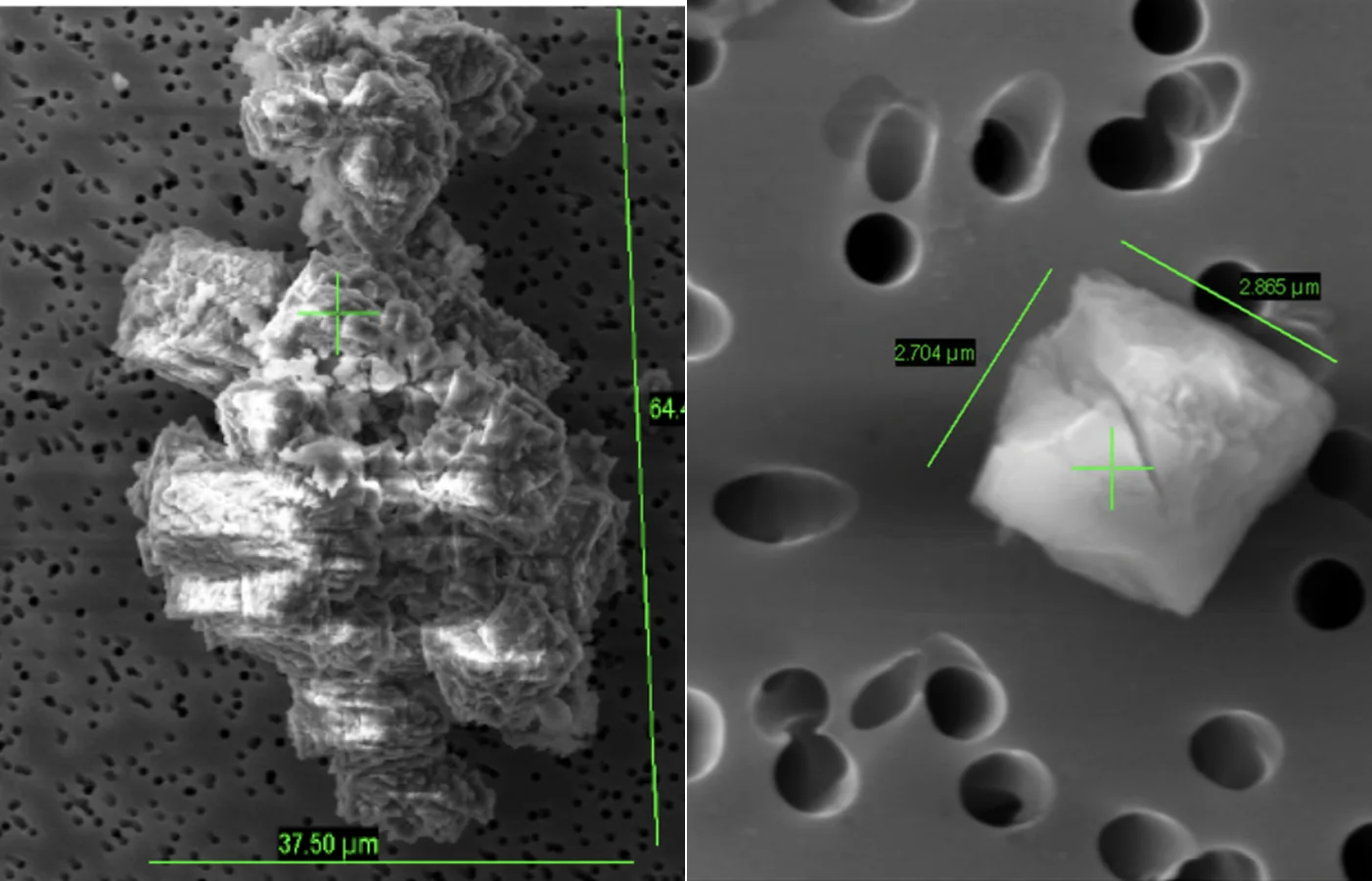
A physical limescale unit adds nothing to the water and takes nothing out. It relies on a fact of mineralogy: calcium carbonate can crystallise in different forms with the same formula. Calcite forms compact crystals that grip walls and grow in layers: that is the crust. Aragonite forms fine needles that stay in suspension and are carried away by the water. If limescale can be made to precipitate as a powder that does not stick, it stops forming scale even though the calcium is still in the water.
EF-i units achieve this without electricity. The internal geometry spins the water in a vortex, a Venturi restriction accelerates it and that acceleration sets the stainless steel core vibrating. The resulting low-frequency sonicophysical waves act on crystallisation: limescale comes out as a fine powder and does not stick. On scale that is already there, the effect is curative and gradual: the deposit comes away in fine particles.
- The water does not change: same hardness, same minerals, same taste. It is still drinking water.
- No consumables: no salt, no cartridges, no product to top up.
- No electricity: the mains pressure itself drives the mechanism.
- A single point: fitted at the inlet, it protects everything after it.
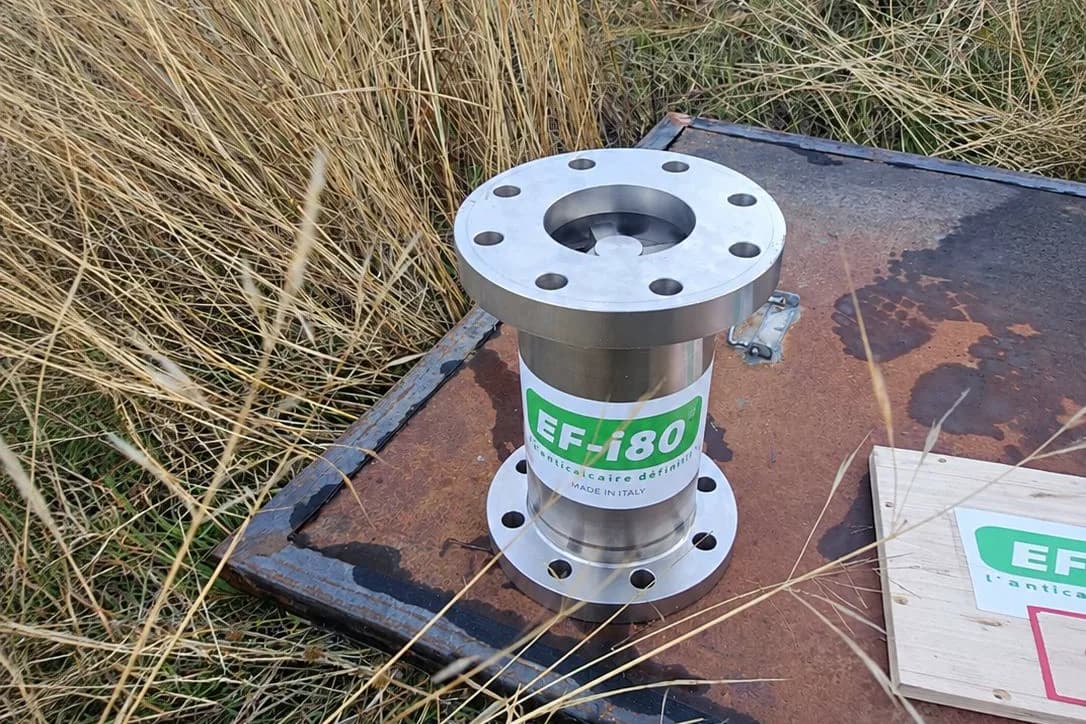
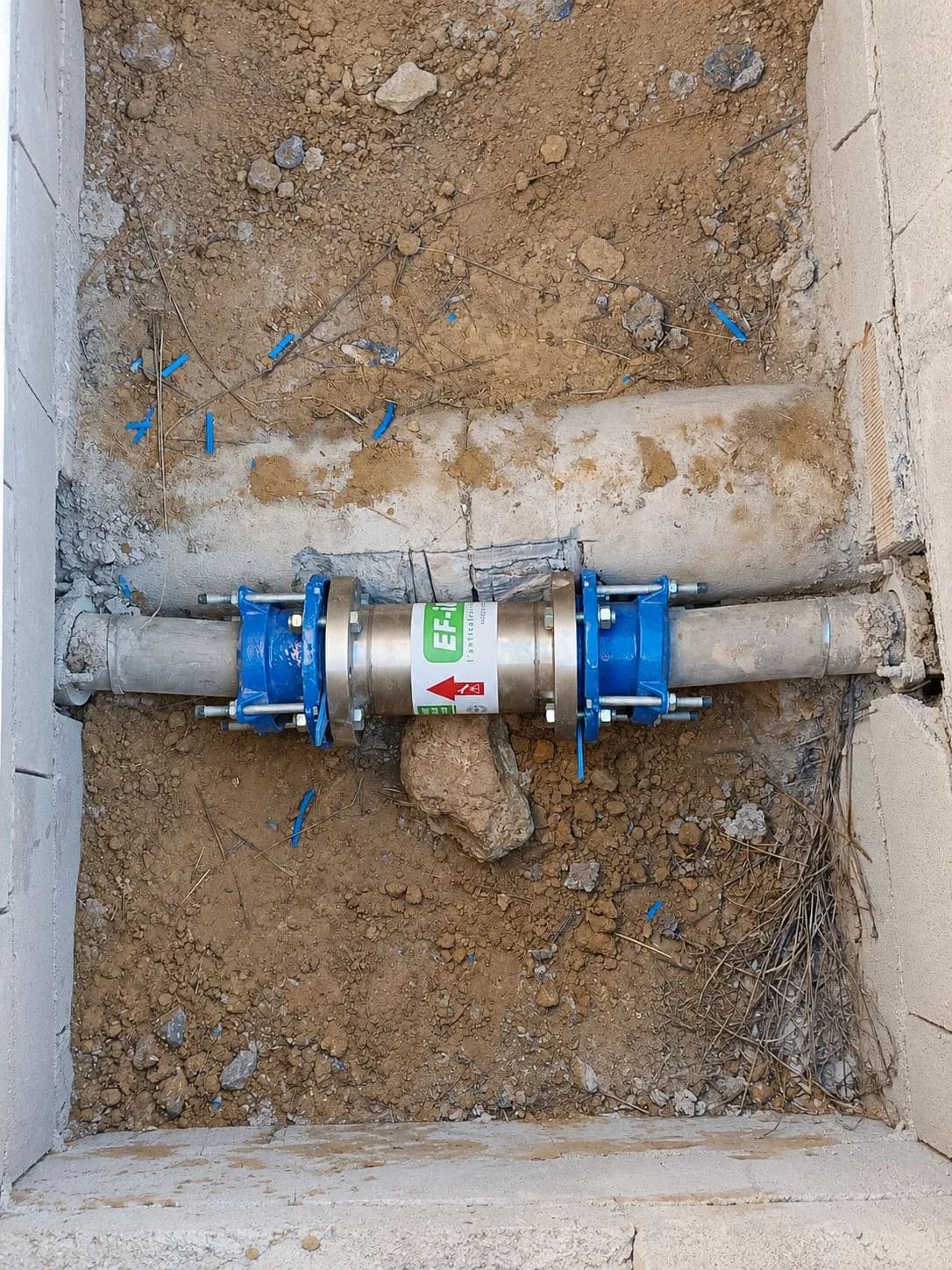
Size does not change the principle. In the village of La Puerta an EF-i80 has been fitted on the main inlet of the network, and from that single point it treats the water for the whole village: we cover it in our references. In a home, the unit is a half-inch EF-i after the water meter.
Which one to choose, depending on where limescale appears
| What you see | What is happening | What makes sense |
|---|---|---|
| Marks on the shower screen and taps | Limescale is already stuck to a surface | A cleaner (or vinegar) today, and treating the water so it does not come back |
| The washing machine or dishwasher cleans worse | Limescale on an appliance's heating element | Tablets for that appliance, or treating the incoming water |
| Water heater or boiler performing worse | Limescale in a heat exchanger you cannot see | Treatment of the whole installation |
| You are losing flow at taps and showers | Limescale inside the pipes | Treatment of the whole installation, with curative effect |
| Building, hotel, industry or municipal network | Many outlets and expensive equipment | Treatment at the inlet, with no consumables to manage |
To know whether your water needs treating, the first figure to check is hardness: we explain it area by area in water hardness in Spain. And if what you are looking for is the limescale unit size that matches your installation, the configurator works it out in a couple of minutes.
Frequently asked questions about anti-limescale
What is anti-limescale?
Any product or unit designed to fight limescale: cleaners that dissolve it, tablets and cartridges that hold it in the water, softeners that remove the calcium and physical units that stop it forming scale. What changes is where each one acts and how long the effect lasts.
What is an anti-limescale cleaner for?
An anti-limescale cleaner removes limescale that is already stuck to a surface (taps, shower screens, tiles). It does not stop it forming again. For limescale to stop appearing, you have to act on the water, not on the surface.
Why does vinegar remove limescale?
Because it is an acid. Acetic acid reacts with calcium carbonate, turns it into calcium acetate, which is soluble and rinses away, and releases carbon dioxide: those are the bubbles you see when you apply it.
How do you make a homemade limescale remover?
Mix white vinegar and water half and half, or dissolve one or two tablespoons of citric acid per litre of lukewarm water. Apply it, leave it for 15 to 30 minutes and rinse. Never mix it with bleach and do not use it on marble or limestone.
What are anti-limescale tablets for?
To protect the washing machine or dishwasher during one wash: they trap the calcium in the water so that it does not settle on the heating element. Their effect is limited to that appliance and that cycle; they do not protect the rest of the installation.
Does a physical limescale unit remove limescale from the water?
No, and it does not claim to: the hardness of the water stays the same. What changes is the way limescale crystallises: it becomes a powder that does not stick and is carried away by the water. That is why the water keeps its minerals and is still drinkable.
How much maintenance does a physical limescale unit need?
None. It has no consumables, uses no electricity and there is nothing to top up or regenerate. It is fitted once, at the inlet of the installation, and EF-i units carry a ten-year warranty.
About this article
Written by the DRAG'EAU Ibérica technical team, drawing on the product range's technical data sheets, product certificates and hands-on installation experience across Spain, Portugal and Andorra. Ranges and estimates are identified as such in the text.
More from the blog
Keep reading
Devices and comparisons Limescale and hardness
What limescale really is and why it sticks to your pipes
Everyone sees it on the shower screen and on the immersion heater, yet few know what it actually is or why it bonds. This guide walks through the whole mechanism: where limescale comes from, the reaction that makes it precipitate, what it costs an installation and which families of treatment exist today.11 min read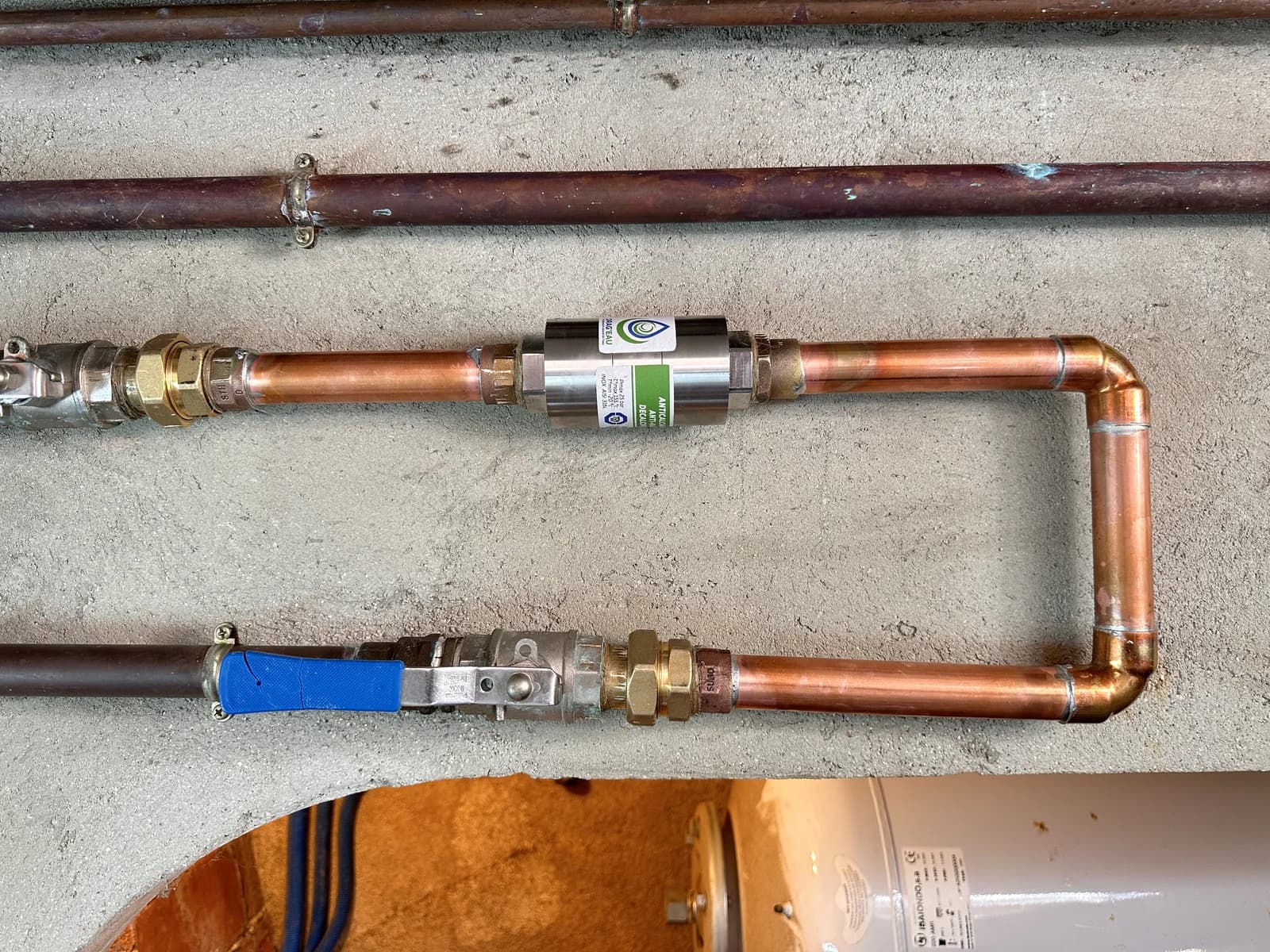 Devices and comparisons
EF-i limescale unit: the 12 questions installers actually ask
We collect the questions that come up on every site visit and answer them straight: what happens to the limescale, what maintenance to promise the customer, how it is fitted, which sizes cover each installation and what equipment it lives alongside. With the full FAQ video.13 min readNewsletter
We'll tell you about every new article
We publish technical guides on water treatment, with no fixed schedule and no filler. Leave your email and we'll let you know when the next one is out.