
 Limescale and hardness
How much money does a hotel lose to limescale?
There is no single figure, and anyone who gives one without knowing the hotel is making it up. What there is, is a list of cost items that can be measured: hot water energy, spare parts, cleaning hours, downtime and reviews. We go through them one by one, with a method for putting a number on each.
Limescale costs a hotel money in five ways: energy, spare parts, cleaning hours, downtime and reputation. The part you can see, on shower screens and taps, is the cheapest. The expensive part is the one you don't see until the day something breaks.
The question is the title of one of our videos, and the answer it gives is an honest one: it is almost impossible to calculate, because a hotel has an annual budget for water treatment, but the consequences of limescale cannot be predicted. A pump that stops working, a machine that bursts, days with part of the hotel out of action. This article attempts the opposite: to turn the incalculable into a list of cost items that any technical manager can measure in their own establishment.
Limescale is like a secret police: you don't realise how much of it you have in your hotel, your hospital or your building until one day everything bursts. The dangerous part is the part you can't see.
DRAG'EAU Ibérica video
Why a hotel suffers more from limescale than a home
On the same mains water, a hotel builds up limescale much faster than a house. It is not bad luck: it is the sum of three factors that occur at the same time.
- Temperature. Legionella prevention requires stored hot water to be kept at 60 °C or above. The hotter the water, the more limescale precipitates, so a hotel's storage cylinders and heat exchangers work right in the most scale-forming range.
- Volume. Hundreds of showers a day, laundry, kitchen and, often, air conditioning and a pool. Every cubic metre of hard water that is heated leaves its load of carbonate somewhere.
- Sensitive equipment. Commercial dishwashers that rinse at over 80 °C, espresso machines, ice machines, laundry steam boilers and cooling towers. All of them have heating elements, nozzles or heat exchangers that limescale chokes.
The five ways limescale costs money
1. Energy: hot water costs more to produce
Calcium carbonate is a thermal insulator. When it settles on a heat exchanger or on the heating element of a storage cylinder, more energy is needed to deliver the same temperature. The figure most widely used in the industry is around 10 % extra consumption for every millimetre of scale. In a hotel, where hot water is one of the largest energy costs, that percentage adds up to a lot of money every year, and it grows as the layer thickens.
2. Spare parts and breakdowns: what gets replaced too early
Clogged shower heads, aerators, seized thermostatic valves, dishwasher heating elements, solenoid valves, pumps that seize up, heat exchangers that have to be dismantled and cleaned with acid. Each one is a small purchase put down to wear and tear. Added up over a year and multiplied by the number of rooms, they are rarely small.
3. Cleaning hours and chemicals
This is the visible part: shower screens, taps and sanitaryware that housekeeping has to descale every day so the room looks new. It means minutes per room and litres of limescale remover every month. On top of that comes the periodic chemical descaling of coffee machines, dishwashers and boilers, which is usually covered by separate maintenance contracts.
4. Downtime: rooms and services out of action
This is the cost that hurts most and is hardest to predict. A room without hot water is a room that does not sell that night. A breakdown in hot water production or in the laundry can take an entire floor out of service, or the whole hotel for days, as the video describes. At that point the cost is no longer the spare part: it is the lost room nights and the compensation paid to guests.
5. Reputation: limescale shows up in reviews too
A shower with weak pressure, a shower screen with white marks or hot water that takes a long time to arrive all end up written on booking platforms. It is the hardest cost to quantify and the one that takes longest to recover from.
How to put a figure on limescale in your hotel
You do not need an audit to get an order of magnitude. It is enough to gather the data your accounts and maintenance teams already hold:
| Cost item | Where to find the data | How to estimate it |
|---|---|---|
| Hot water energy | Gas or electricity bills | Annual cost of hot water × 10 % per millimetre of scale |
| Spare parts | Maintenance purchases | Shower heads, aerators, thermostatic valves, heating elements and pumps over the last year |
| Cleaning | Housekeeping schedule | Extra minutes per room × rooms × days open × hourly cost |
| Products and descaling | Purchases and contracts | Limescale remover + chemical descaling of equipment |
| Downtime | Breakdown reports | Rooms out of service × nights × average rate |
The 10 % per millimetre is an industry rule of thumb, not a law: it depends on the equipment and the deposit. It is good for an order of magnitude.
What can be done, from most to least recurring
Clean and descale
Limescale remover in the rooms and chemical descaling of equipment. Necessary when the limescale is already there, but it does not stop it coming back: it is a cost that recurs every week and every year.
Salt softener
Removes calcium from the water using a resin that is regenerated with salt. It protects the installation, but it uses salt and water, produces a discharge and needs servicing. The full comparison is in salt softener or physical treatment.
Physical limescale unit at the inlet
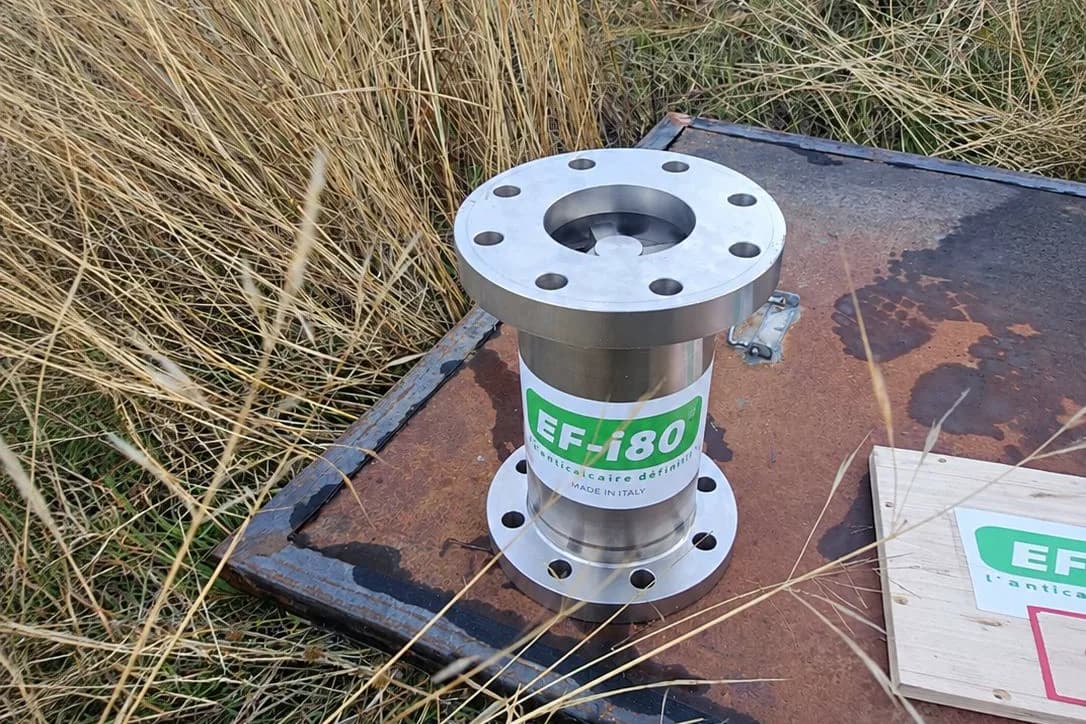
An EF-i unit on the main water inlet makes limescale crystallise as a powder that does not stick. It protects everything downstream, with no consumables, no electricity and no change to the water's composition.
And if the hotel has closed heating or cooling circuits, their problem is not limescale but sludge and corrosion, and that is treated with a different unit, the DS-i Anti-sludge. A real case, with two chillers brought back into service, is in this article.
You can see how it was solved in a high-turnover hotel, with one EF-i for the hotel and another for the automatic irrigation, in our references.
Frequently asked questions about limescale in hotels
How much money does a hotel lose to limescale?
It depends on the hardness of the water, the size of the hotel and its equipment, so there is no universal figure. It can be estimated by adding up five cost items: hot water energy (around 10 % more for every millimetre of scale), spare parts, cleaning hours, chemical descaling and rooms out of service due to breakdowns.
Why does a hotel have more limescale problems than a home?
Because it keeps its hot water at 60 °C or above to prevent Legionella, and the hotter the water, the more limescale precipitates. Add to that the volume of consumption and very sensitive equipment such as commercial dishwashers, coffee machines, ice machines or steam boilers.
Does limescale encourage Legionella?
Scale and sediment give shelter to the biofilm in which the bacterium grows. That is why Legionella prevention and control plans include the inspection and cleaning of storage cylinders and outlets.
Does the hotel have to close to fit a limescale unit?
No. The unit is fitted inline on the incoming pipe, so a short water shut-off scheduled for the quietest hours is all it takes. It needs no electricity and no space for salt tanks.
Does a physical limescale unit replace room cleaning?
It does not replace cleaning, but it makes it lighter: because it no longer forms scale, the limescale that reaches shower screens and taps wipes off with a cloth instead of building up in layers. The scale already in the installation comes away gradually.
About this article
Written by the DRAG'EAU Ibérica technical team, drawing on the product range's technical data sheets, product certificates and hands-on installation experience across Spain, Portugal and Andorra. Ranges and estimates are identified as such in the text.
More from the blog
Keep reading
Limescale and hardness Limescale and hardness
What limescale really is and why it sticks to your pipes
Everyone sees it on the shower screen and on the immersion heater, yet few know what it actually is or why it bonds. This guide walks through the whole mechanism: where limescale comes from, the reaction that makes it precipitate, what it costs an installation and which families of treatment exist today.11 min read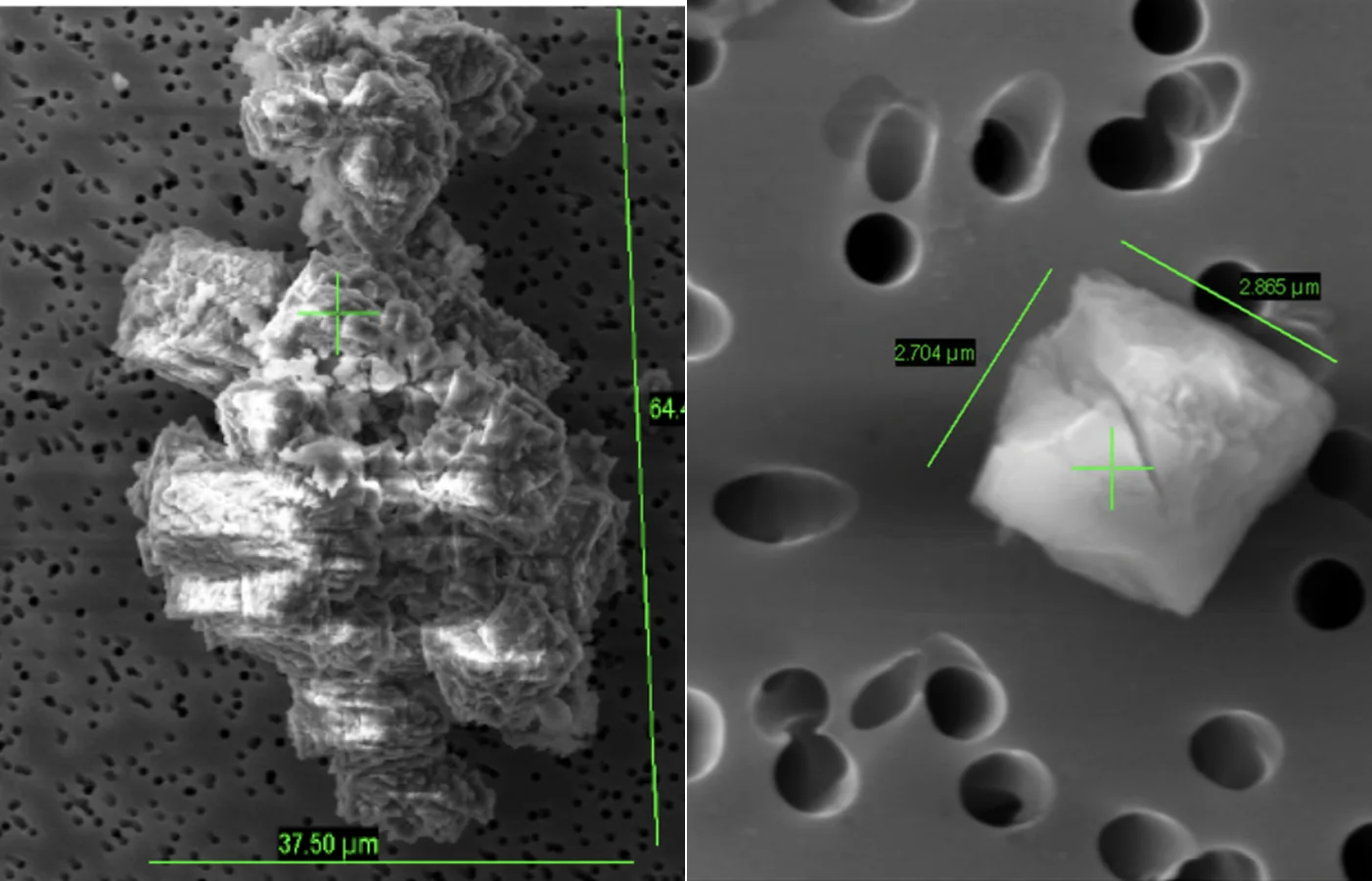 Devices and comparisons
Salt softener or physical treatment: a point-by-point comparison
The two technologies solve the same problem by opposite routes: one removes calcium from the water, the other stops it bonding. We compare consumption, discharge, maintenance, space and running costs, and we also say where a softener remains the right answer.12 min readNewsletter
We'll tell you about every new article
We publish technical guides on water treatment, with no fixed schedule and no filler. Leave your email and we'll let you know when the next one is out.